
In this guide 9 sections
- 1 How do I check if a car is insured?
- 2 What does the Motor Insurance Database actually show?
- 3 How do I know if I am insured to drive a car?
- 4 How do I check if a car is taxed?
- 5 How do I check a car’s MOT?
- 6 Can I check if another driver is insured after an accident?
- 7 How do I check that my own policy is genuine?
- 8 What happens if the car is not insured?
- 9 What the checks look like side by side
There are three public records for a car on the road, kept by three different bodies, and none of them talks to the others on the screen in front of you. Insurance is held by the Motor Insurers’ Bureau, tax by the DVLA, and MOT history by the DVSA. Each takes the registration and gives an answer in seconds. The trick is knowing what each answer means, and what it leaves out.
How do I check if a car is insured?
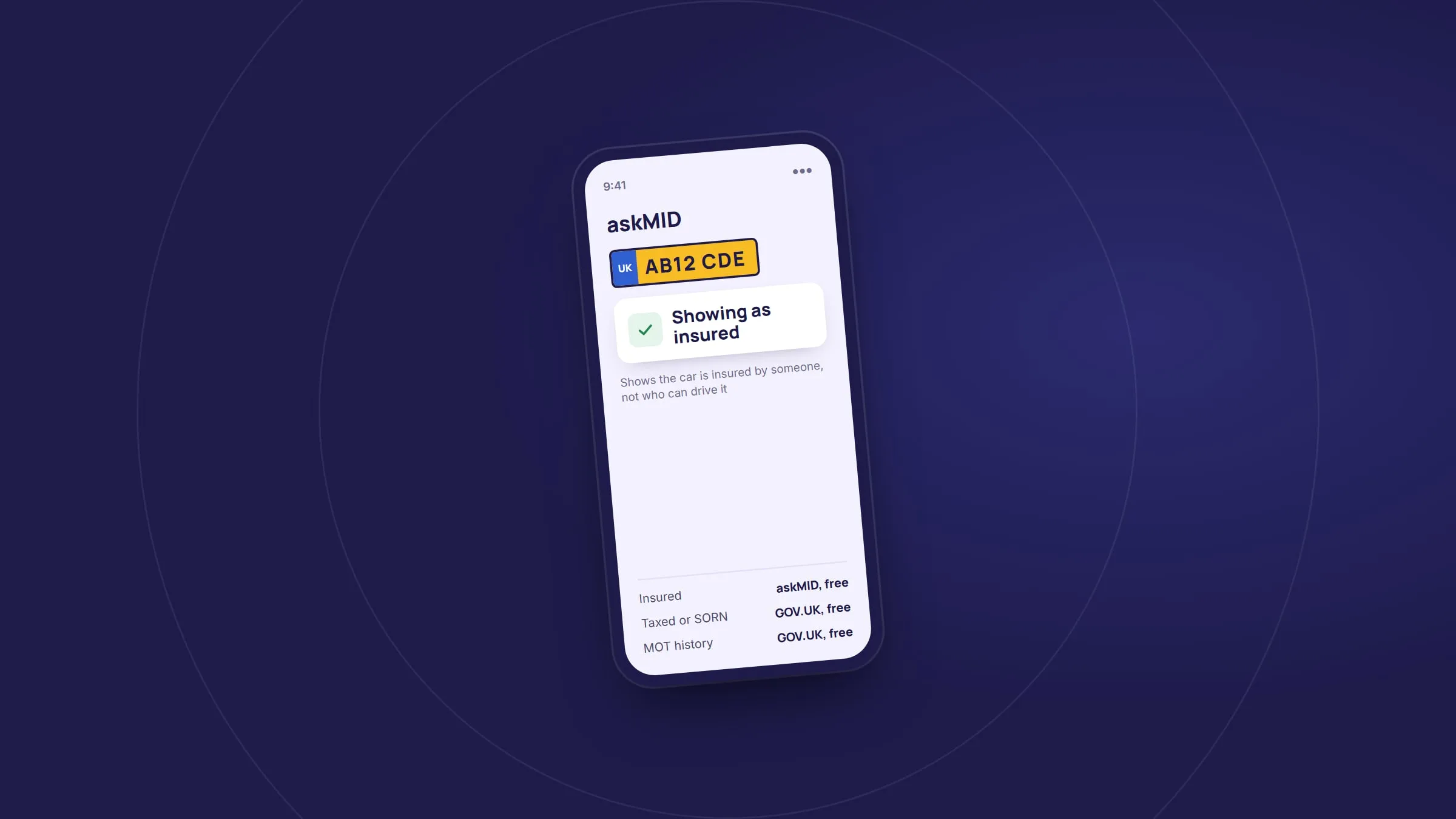
Enter the registration on askMID.com. The free check tells you whether the vehicle is showing as insured on the Motor Insurance Database today.
- Open askMID.com and choose the free check for your own vehicle. The site now runs on the Bureau’s Navigate platform, so the page you land on carries that name.
- Accept the terms. They say the check is for a vehicle you own or are insured to drive.
- Type the registration exactly as it appears on the plate.
- Read the result. Either the vehicle is showing as insured, or it is not.
That is all the free check gives. It does not name the insurer, show the policy dates or list the drivers. If the result says the vehicle is not showing and you know it is insured, the record has usually not caught up yet, which takes up to seven days for an annual policy and a few hours for a temporary one.
What does the Motor Insurance Database actually show?
A record against the registration, saying that at least one policy covers the vehicle. Nothing about who may drive it.
The database is built for the police and the DVLA, not for buyers and borrowers. A number plate camera reads the plate, looks it up, and flags any vehicle with no record. That is the extent of it. Three things people assume it shows, and it does not:
- Who is insured. The policy is held by a person, the record by the vehicle. A car showing as insured can be driven uninsured by anyone who is not on the policy.
- The level of cover. Third party only and fully comprehensive look identical on the database.
- Whether the policy will still be there tomorrow. A cancelled or lapsed policy drops off, and the check is a snapshot of today.
So the database answers one question, “is this vehicle insured by someone?”, and it is the police who ask it. The questions a driver actually has are different.
How do I know if I am insured to drive a car?
Check the certificate, not the database. If your name is not on a policy that covers that car, you are not insured to drive it.
The certificate of motor insurance names the policyholder, the vehicle, the dates, and either the named drivers or the classes of driver allowed. Read it against three questions:
- Is the car on it, by registration?
- Are you on it, by name, or within a class such as “any driver over 25 with the policyholder’s permission”?
- Are the dates in force, including the time of day on a short policy?
A borrowed car is the usual trap. The owner’s policy shows on the database, so the car looks fine, but the borrower is uninsured unless they are named on that policy, have their own cover for it, or hold a policy with a driving-other-cars extension that applies. Additional driver insurance is the standalone route: a policy in the borrower’s name, on the owner’s car, for 1 hour to 28 days, with the owner’s no claims discount untouched by anything that happens on it.
Borrowing a car? A policy in your own name starts from one hour.
Get QuotesHow do I check if a car is taxed?
Use the vehicle enquiry service on GOV.UK. It shows whether the car is taxed or on a SORN, when the tax runs out, and the rate.
The GOV.UK vehicle enquiry service takes the registration and returns the tax status, the date it expires or the fact that a Statutory Off Road Notification is in place, and the vehicle’s make, colour, engine size and first registration date. It is free and needs no log-in.
It does not show insurance, and the page says so, pointing to askMID instead. Tax and insurance are enforced together, though. Every month the DVLA and the Bureau compare the two records and write to the keeper of any vehicle that is taxed, not on a SORN and not showing as insured. That letter is the first step in Continuous Insurance Enforcement, and ignoring it leads to a £100 fixed penalty, clamping or impounding, and a court fine of up to £1,000, whether or not the car has been driven.
How do I check a car’s MOT?
Use the MOT history service on GOV.UK. It shows every test since 2005, with the mileage, the result, the advisories and the next due date.
The MOT history service is the one check that tells you something about the car itself. Each test shows as a pass or a fail, with the mileage recorded on the day, which is how a wound-back odometer gets caught, and the advisories the tester noted. In England, Scotland and Wales you can also see which parts failed and download the current certificate with the 11-digit reference from the log book.
For a car you are about to buy, the three checks together take two minutes: insured by someone (askMID), taxed or SORN (vehicle enquiry), and MOT history with mileage (MOT history). None of them replaces a history check for finance and write-off records, but they are free and they catch the obvious.
Can I check if another driver is insured after an accident?
Yes, through the Other Vehicle Lookup on askMID. It costs £10 and returns the insurer and policy number for a claim.
After a collision the free check is no use, because it only says yes or no and you need to know who to claim against. The Other Vehicle Lookup asks for the registration of the other vehicle, the date and the circumstances, and returns the insurer’s name and the policy number. The Bureau charges £10 for it.
If the lookup returns nothing, the other driver may have been uninsured, and the claim goes to the Bureau itself under its uninsured drivers agreement rather than to an insurer. Note the registration, take photographs, and report it to the police with the time and place.
How do I check that my own policy is genuine?
Look the firm up on the Financial Services Register, make sure the documents came from that firm, and run the registration on askMID a week after the start date.
Ghost broking is the sale of a policy by someone who is not authorised to sell it. The usual pattern is a cheap quote through social media or a messaging app, documents that look right, and a policy that was either never issued, was cancelled after the first payment, or was bought with false details and will be voided at the first claim. The driver finds out at the roadside.
Three checks catch it:
- The firm. Every insurer and broker in the UK is on the Financial Services Register. Search the name on the documents. The register also shows trading names, so a firm trading under a brand still appears.
- The source. Policy documents come from the insurer or broker’s own systems, by email from its domain, with a policy number you can quote back to it by phone. Documents forwarded from a personal account are a warning.
- The database. Run the registration on askMID after the time the insurer has to upload it. If it is still not showing after seven days, ring the insurer on the number on its own website, not the number on the documents.
Policies are issued by the broker, which is authorised and regulated by the Financial Conduct Authority and named in the small print under every quote form. The documents come from it directly, as soon as you pay.
What happens if the car is not insured?
For the driver, £300 and 6 points, or worse at court, and the car can be seized. For the keeper of a taxed car, a £100 fixed penalty and clamping even if it never moves.
GOV.UK sets out the penalties. Being uninsured to drive a particular vehicle is the offence, so the driver of an insured car who is not on its policy is committing it. The police can seize the vehicle, and getting it back means paying the pound and arranging a policy that meets the pound’s insurance condition, which impound release insurance explains.
For the keeper, the duty is continuous. A vehicle must be insured or declared off the road, and the monthly comparison between the tax and insurance records finds the ones that are neither.
What the checks look like side by side
| Check | Where | Shows |
|---|---|---|
| Insured | askMID, free | Whether a policy shows for the plate today |
| Other driver’s insurer | askMID, £10 | Insurer and policy number after an accident |
| Taxed or SORN | GOV.UK vehicle enquiry, free | Tax status, expiry, vehicle details |
| MOT | GOV.UK MOT history, free | Every test, mileage, advisories, next due |
None of the four tells you whether you are insured to drive the car. For that, read the certificate, and if your name is not on one that covers it, buy a policy before you turn the key.